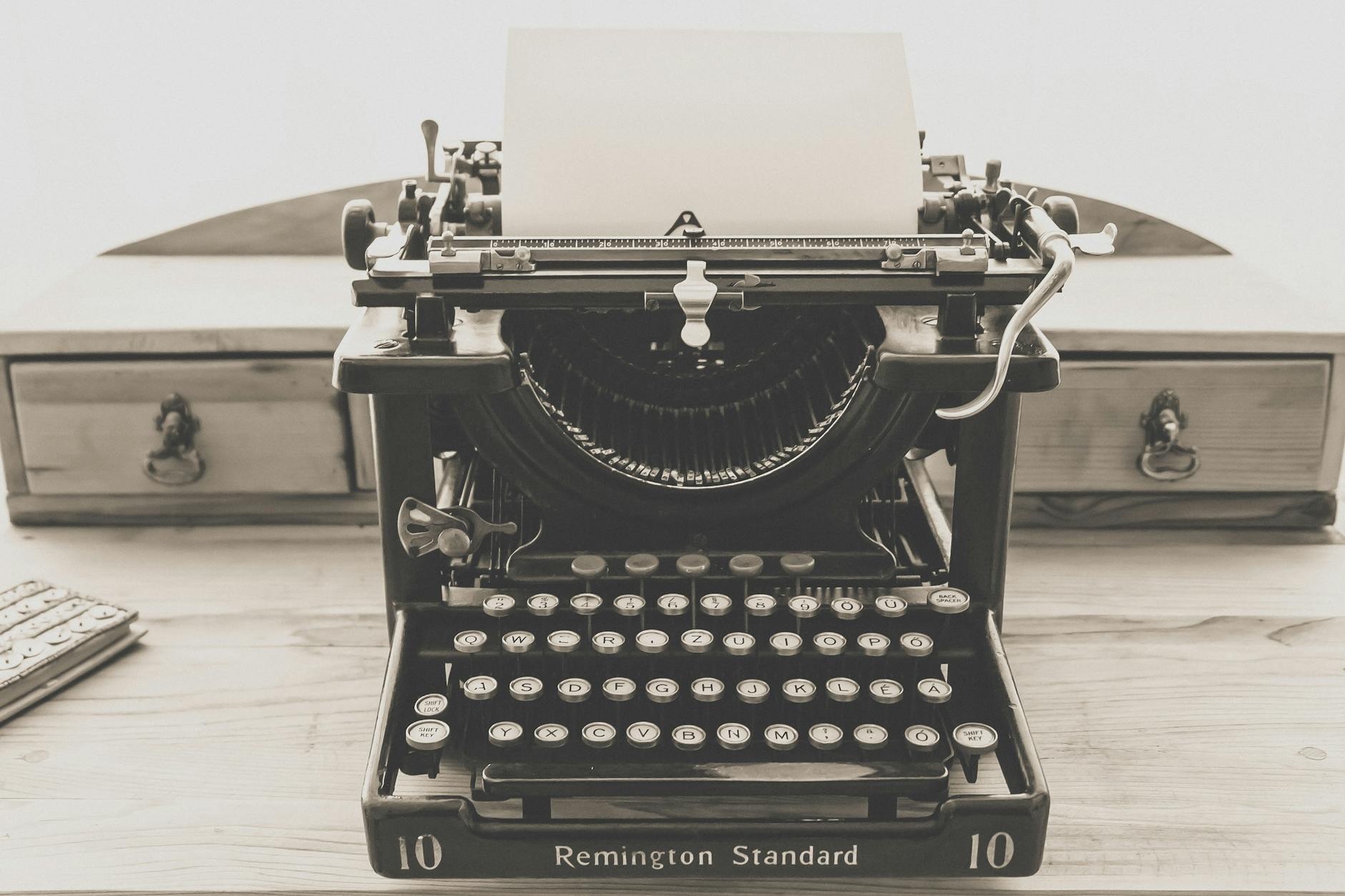
Writing is sometimes liking pulling your own teeth out even though there’s nothing wrong with them. It’s a battle between the human mind, an idea, and the keyboard. Why is it that the keyboard can’t convey the emotion I’m feeling at the moment of writing? Stupid thing.
It’s a battle of wits that only ceases at the end of a very long and often tiring day, spent creating absolute bilge, that sends you to bed wondering why you didn’t take up knitting. In the morning it’s almost bearable, by mid afternoon you can work with yesterday’s rubbish, and by that night you think you almost might be an actual writer. Until you sit down the next morning and the keyboard fights back.
It’s a battle between imagination and visualisation, frustrated by homophones. If you’ve never heard that word just think their, there, and they’re, where your incite encourages your insight to get into a fight, that only the correct word can prevent. It’s so embarrassing to realise you’ve insighted a fight.
Peak, peek, and pique are other confounders where the fingers ask for a word and the brain spits back something that sounds like it: a peek at the mountain told me that I’d never reach the peak, and left me in a fit of pique.
Imagine how hard it is when your imagination can’t spell correctly. The problem is we’re trying to do everything at once. Daydream, be inspirational, come up with the words, spell them correctly, and be an artist.
The second problem is that you can’t spell check your own writing. After an hour I can usually do a decent job spell checking a short blog, but I wouldn’t attempt a book! In fairness, we are up against the human miracle that even if a word is incorrectly spelt your brain knows what it should say. It’s to, two, too much at times.
Autocrap
My self-created problem with writing is that I will insist on picking up my phone, and I’ve made so many mistakes on it that my autocorrect barely speaks English.
I type at nearly 100 words per minute with a high level of accuracy on a keyboard, but my mind simply won’t accept that my phone cannot keep up and the keys aren’t big enough. I gaily thunder away at high speed writing unintelligible nonsense and then spend more time correcting it than it would take me to grab my portable, and very good, Bluetooth keyboard and use that!
So I guess another complication of my writing is my refusal to accept technological limitations. What? It’s not my fault they didn’t measure my fingers in order to create the virtual keyboard.
The ‘ations’
To write you need inspiration. To keep going you need to overcome desperation. To put something really classy together you need elimination: every single superfluous word must be ruthlessly expunged even if you love those words with every beat of your heart. It’s like murder trying to modify your writing.
Sadly it is totally, completely, absolutely, literally, really, very, rather, quite, somewhat, somehow, challenging but necessary, to take apart your writing to find these unnecessary verbalisations. But one must be brave even if hitting delete makes you want to cry.
You also have to remove all the bits where you’ve tried to be too clever with descriptions and landed up with a startlingly high, craggy, grey and green striped, cold, hard, menacing, rocky, mountain. It sounded good when you wrote it but now you want to throw your keyboard out the window and take up snorkelling as a subtle attempt to drown yourself in your misery.
One enormous plus
Nowadays we don’t have to do battle with the ancient typing instrument at the top. I used to use one of those prior to the days of Tippex, which younger people probably haven’t encountered either. If you were born after the invention of the delete key and spell check you’re very lucky.
A typewriter was an exacting instrument that demanded perfection at all times. If you made a mistake on a page you had to retype the entire page, at which point you would make ten more mistakes for every one you were trying to correct.
Tippex was a white fluid with a small brush, and you could make a singularly unprofessional white blob or stripe, and type over it. Providing you could align the paper exactly as before to the last millimetre. This meant releasing the paper grip thingy and wiggling the paper around a bit whilst praying for spatial awareness and the ability to see a straight line. Often your words looked like they’d been written at sea in a terrifying storm.
Ultimately
It’s a wonderful art though. When you turn out something that you like the world becomes a brighter place. When someone gives you a good review you’re walking on air. So please, readers, remember how much it means to an author, poet, playwright, songwriter, to receive those reviews.
It’s not the money that’s the real payment. Anyone can buy a book and throw it in a bin. You can read poetry and have no idea what it means except that the author is a weirdly confused human being. You can see a play and hate every moment even if you paid to see it.
Those words of gold mean that you like our work. As such they’re the only real payment for all of the above angst, sleepless nights, self loathing, existential crises, over-caffeination, and virtual starvation, that the writer has to battle to get words onto paper or screen.
They’re the whole entirety of why we write – and that means everything. 😉
Deb xx

 Deb Hawken - Amorah